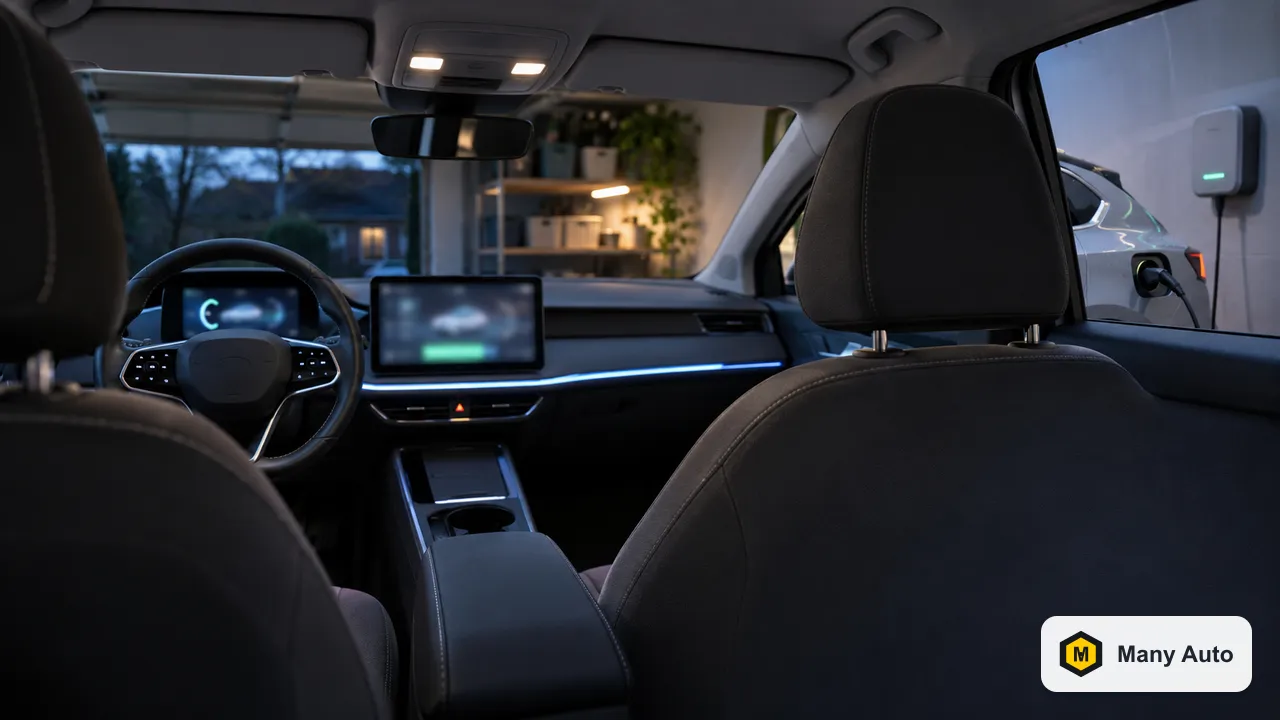
From 1 April 2028, drivers of electric and plug-in hybrid cars will pay a mileage charge called Electric Vehicle Excise Duty, or eVED, on top of ordinary vehicle tax. The rates set by the Treasury are 3p a mile for battery electric and hydrogen cars and 1.5p a mile for plug-in hybrids. You will give an odometer reading and estimate your mileage for the coming year when you renew your car tax, and the rates will rise with CPI from 2029 to 2030. Nothing is payable yet: the legislation is in the Finance Bill 2026-27 and the first charges start in spring 2028.
Why it is happening
Fuel duty is paid every time someone fills a tank. An electric car pays none, so as more drivers switch, the Treasury collects less. eVED was announced at the 2025 Budget as a way to replace some of that lost revenue. The Autumn Budget on 28 October 2026 did not change the rates; it filled in more of the detail on how drivers will report and pay.
The rates and what they mean for a typical driver
The Budget 2026 overview of tax legislation and rates sets out:
- Battery electric vehicles and hydrogen fuel cell vehicles: 3p per mile.
- Plug-in hybrid vehicles: 1.5p per mile.
- Start date: 1 April 2028.
- Uprating: in line with CPI from 2029 to 2030 onwards.
- Renewal: alongside your existing VED.
The arithmetic is simple. At 3p a mile:
| Annual mileage | Battery electric (3p) | Plug-in hybrid (1.5p) |
|---|---|---|
| 5,000 | £150 | £75 |
| 8,000 | £240 | £120 |
| 10,000 | £300 | £150 |
| 15,000 | £450 | £225 |
Those figures are at the 2028 rates. From 2029 to 2030 they rise with inflation each year.
How you will report your miles
This is the part most drivers asked about, and the October Budget answered some of it. According to the Budget 2026 document:
- An estimation tool at launch. When eVED starts in April 2028 there will be a government tool to help you estimate how many miles you will drive in the year ahead. Work on features such as benchmarking against similar drivers is under way.
- eVED Connect. An opt-in service will use the car's own connectivity so you do not have to report mileage manually. It may also help with the estimate for the following year.
- Refunds. An automated refund model is due by 2030, covering cases such as overestimating your mileage or selling the car part way through the period.
The plain reading is that the first couple of years will rely on drivers estimating honestly and giving an odometer reading, with smoother refunds coming later. The government has said it will work with industry and publish guidance for fleet operators.
What we still do not know
Several practical points were not set out in the documents we read, and it would be guesswork to fill them in:
- Exactly how and when the payment is collected, and whether it can be spread by Direct Debit like VED.
- How an underestimate is corrected, and whether there is any penalty if you drive further than you said.
- How odometer readings will be checked. The MOT already records mileage, which is an obvious cross-reference, but the government has not confirmed the method.
- How used-car sales mid-year will work before the refund system arrives.
We will update this article when HMRC or DVLA publish operational guidance.
Does this change whether an EV makes sense?
For most people it narrows the gap rather than closing it. A 3p-a-mile charge is real money at high mileage, but it should be weighed against what you would spend on fuel in a petrol or diesel car, plus servicing differences and the price of the car itself. The fuel duty on petrol is currently 52.95p a litre before VAT, frozen until the end of June 2027. A petrol car doing 45 miles per gallon pays roughly 5p a mile in duty alone, before VAT and the fuel itself. That comparison will move as fuel duty and eVED rates change, so run your own numbers with your real mileage.
The bigger variable for EV running costs is still where you charge. Home charging on an off-peak tariff is far cheaper per mile than public rapid charging, and that difference dwarfs eVED for many drivers. If you are new to electric cars, our EV basics guide covers charging, winter range and servicing, and our piece on running an EV without a driveway looks at public charging costs.
Plug-in hybrids: the awkward middle
A plug-in hybrid pays half the eVED rate on every mile, whether that mile was driven on battery or on petrol. Petrol miles also pay fuel duty at the pump. So a hybrid driven mostly on its engine pays both. If you bought a plug-in hybrid for company car tax reasons and rarely charge it, 2028 is a good moment to reconsider whether the car suits how you actually drive.
If you are buying a car now
eVED will apply to the car, not to when you bought it. An electric car bought in 2026 will pay the charge from April 2028 just like one bought new that year. That is worth remembering if a seller presents running costs that assume no road tax and no mileage charge. For a used purchase, the checks in our used-car guide still apply, including looking up the MOT history to see whether the recorded mileage makes sense.
Quick summary3p a mile for battery electric cars, 1.5p for plug-in hybrids, from 1 April 2028. Estimate your miles at renewal, with an official tool to help. Connected-car reporting will be optional. Refunds for overestimates get an automated system by 2030.