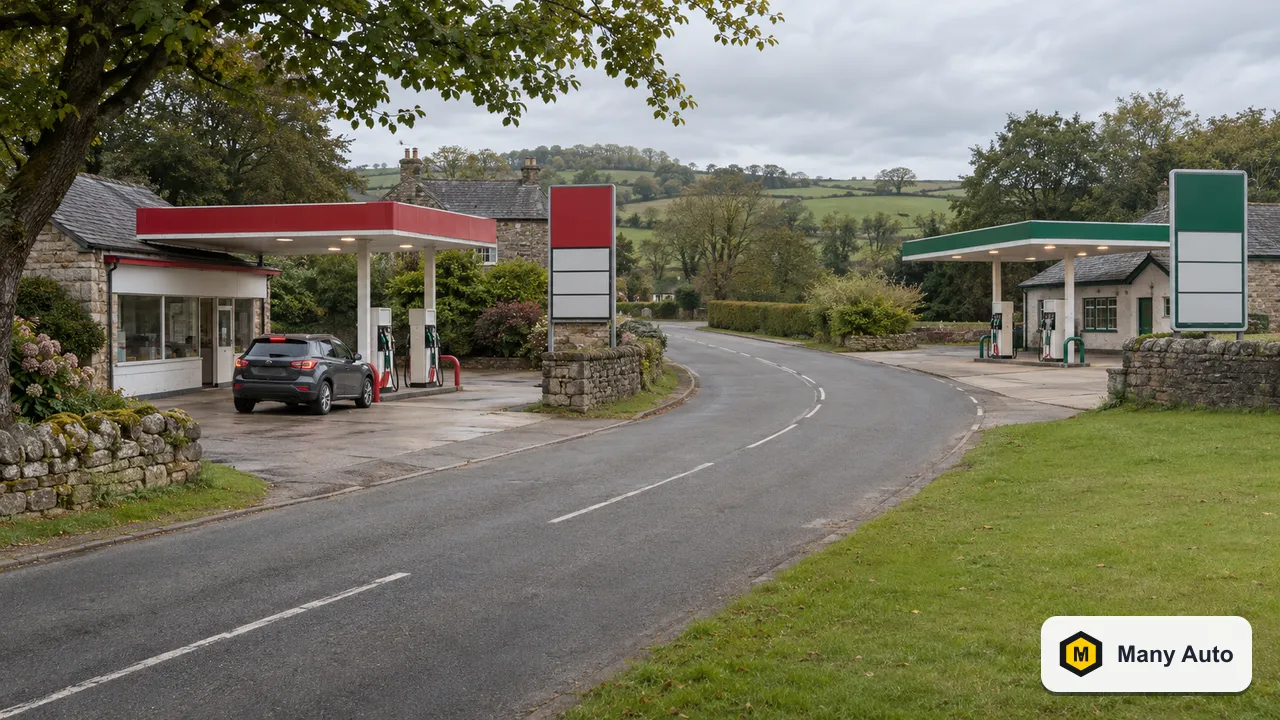
Every filling station in the UK now has to publish its petrol and diesel prices, and update them within 30 minutes of a change. That data is called Fuel Finder. There is no official government app: you see the prices through ordinary apps and websites that use the feed, including RAC Fuel Watch, PetrolPrices.com, Confused.com, MotorMouth and Fuel Spy. Pick one, set it to your home postcode and your usual route, and check it before you fill up. With diesel having gone past £2 a litre in October, the gap between the cheapest and dearest forecourt in a town is worth a few minutes.
What Fuel Finder is, in plain terms
The scheme went live at the start of 2026. Before it, price comparison relied on a handful of retailers volunteering data or on drivers reporting prices they had seen. Now reporting is a legal duty. The government's Fuel Finder factsheet for drivers sets out the basics:
- It covers petrol and diesel at every petrol filling station in the UK.
- Stations must report a price change within 30 minutes of making it.
- The Competition and Markets Authority can take enforcement action against stations that do not share their prices.
- If the price on the pump does not match the published price, you can report it through GOV.UK.
When the factsheet was published at the end of March, about 90% of stations had signed up, and the government expected the rest to follow.
Which app should you use?
The government's announcement named Confused.com, DriveScore, Fuel Finder UK, Fuel Spy, MotorMouth, PetrolPrices.com and RAC Fuel Watch as platforms using the data, and said more would follow. The government does not endorse any one of them. Because the underlying prices are the same, the differences are about layout and extras:
- Map first or list first. If you mostly fill up near home, a list sorted by price within a few miles is quicker to read than a map.
- Route search. Some apps let you search along a journey, which matters on a long run where the cheapest station near home is irrelevant.
- Price alerts. Useful if you can choose when to fill up, less so if you always buy on the way to work.
- Accounts and data. Several apps work without signing in. If one asks for an account, read what it does with your location before agreeing.
If you are already a member of a breakdown service, its app may show the same prices, which saves installing something new.
How much can you save?
The government's own estimate is around £40 a year on average for households with a car. That figure is an average across all drivers. People who cover high mileage, run diesels, or live where prices vary widely will save more; someone who fills up once a month at the supermarket they already use will save little.
Two habits do most of the work:
- Do not buy on the motorway unless you have to. Service area fuel is usually the most expensive on any route. Filling up before you join, or coming off at a junction town, normally costs a short detour.
- Compare across a few miles, not across the county. Driving 15 miles to save 3p a litre on a half-empty tank costs more in fuel and time than it saves.
A rough test: multiply the price gap in pence by the litres you are buying. A 4p gap on 45 litres is £1.80. That is worth turning left for, but not worth a ten-mile round trip.
What to do if the price is wrong
Prices move. A station might change its board and its feed a few minutes apart, and an app might cache a price for a while. If you pull in and the pump is clearly higher than the published figure, take a photo of the board and the pump display with the time showing, then use the GOV.UK route for reporting an error in fuel prices or forecourt details. You are not obliged to buy at the higher price, so the simplest response is often to drive on to the next station on your list.
Why this matters more this winter
The Budget 2026 document notes that petrol rose 33% and diesel 41% between February and October 2026. The 5p duty cut has been extended to the end of June 2027, so the tax element is steady for now, but the underlying fuel price is not. That makes the spread between retailers more important than usual, especially in rural areas where the nearest alternative may be some distance away. Our piece on the fuel duty extension covers the July 2027 change in detail.
A ten-second routineBefore a fill-up, open the app, look at the three cheapest stations within your normal route, and pick the one you are passing anyway. That is the whole habit. Most of the saving comes from never paying the highest price in town by accident.
Use the fuel you buy well
Finding a cheaper forecourt saves pence per litre; using fewer litres saves more. Correct tyre pressures, a car that is not carrying a roof box it does not need, and gentler acceleration all help. Odd noises can also signal something that is quietly costing fuel, such as a dragging brake; our guide to the sounds a car makes explains what to listen for. And if a warning light comes on during a cold spell, see our winter driving checklist before a long trip.